
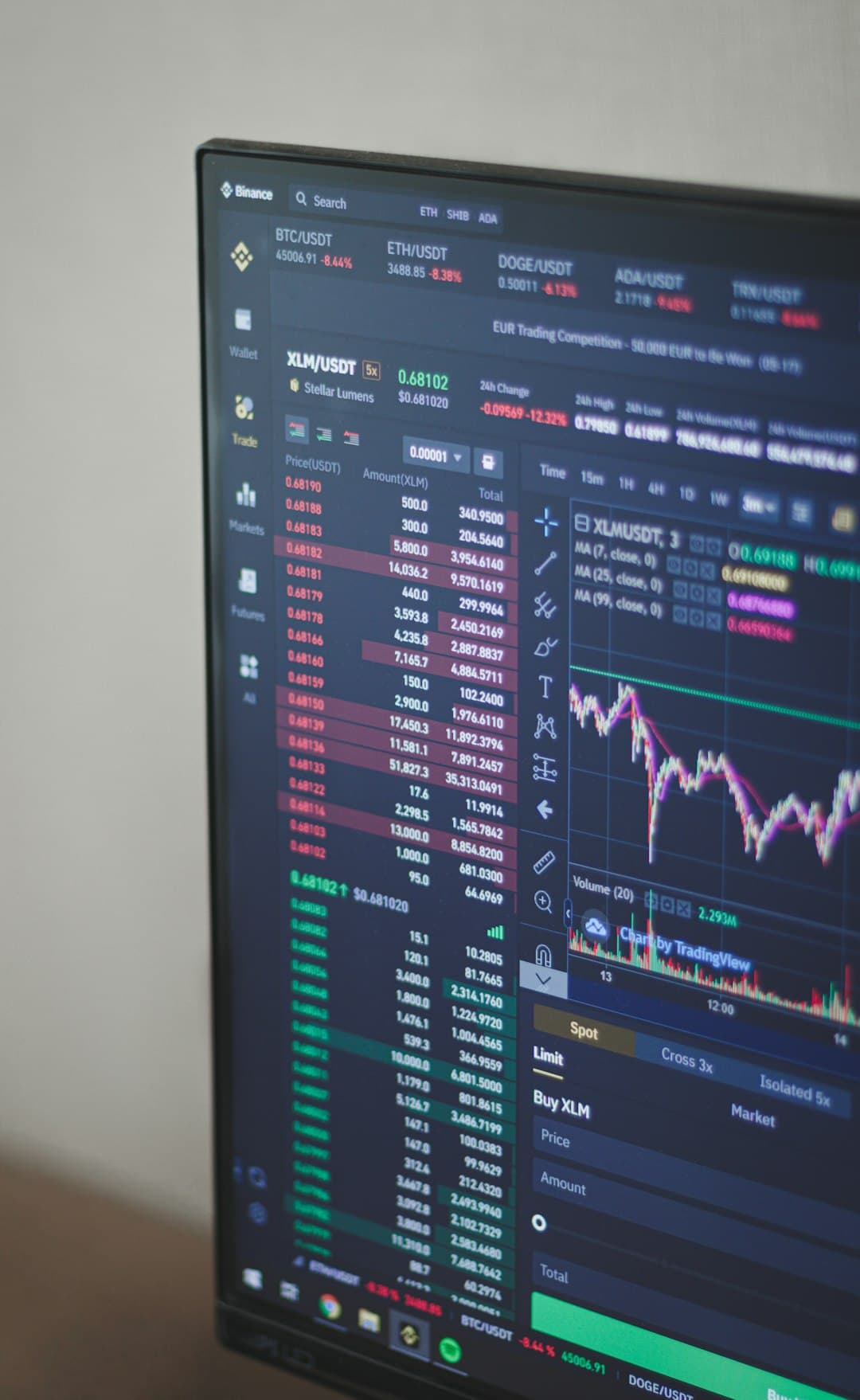
Module Overview
The 2022 failures (Mt. Gox, FTX, Celsius, Voyager) all involved centralized exchanges. The protocols built into DEXs cannot fail the same way. Knowing the structural difference protects you from the most common catastrophic outcomes in this space.
- A CEX (Coinbase, Binance, Kraken) is a custodial business — you deposit funds, the exchange holds the keys, trades happen on its internal database.
- A DEX (Uniswap, Curve, 1inch) is a smart contract — you trade directly from your wallet, the exchange never custodies your funds.
- Automated Market Makers (AMMs) eliminated the order book — prices set by a mathematical formula based on liquidity pool balances.
- DEXs cannot become insolvent or freeze your account. They also cannot help you with mistakes or fiat conversions.
- Uniswap dominates general DEX trading. Curve dominates stablecoin swaps. DEX aggregators (1inch, Matcha) route trades across multiple pools for optimal pricing.
Key Terms
The vocabulary this module unlocks. Skim before you read.
- Centralized exchange (CEX)
- A company that operates a trading venue, holds customer assets, and matches trades on an internal order book. (Coinbase, Binance, Kraken.)
- Decentralized exchange (DEX)
- A trading venue implemented as smart contracts on a blockchain. Customer assets stay in self-custody throughout. (Uniswap, Curve, dYdX.)
- Automated Market Maker (AMM)
- The pricing mechanism most DEXs use instead of an order book. Uses liquidity pools and a formula to set prices algorithmically.
The lineage before 2008
2010
Mt. Gox launches
Originally a Magic: The Gathering trading card site, repurposed for Bitcoin. At peak, handles ~70% of global BTC volume.
2012
Coinbase founded
Brian Armstrong and Fred Ehrsam build the consumer-facing, regulated US exchange.
Feb 2014
Mt. Gox collapses
850,000 BTC lost (worth $450M at the time, tens of billions today). First major CEX failure.
Jul 2017
Binance launches
Builds the largest global exchange by volume in under a year.
Nov 2018
Uniswap v1 ships
First widely-used AMM-based DEX. Solves the DEX liquidity bootstrapping problem.
May 2020
Uniswap v2 launches
Arbitrary ERC-20 pairs supported. DEX volume scales dramatically.
2022
CEX collapse cascade
Celsius, Voyager, BlockFi, FTX all fail. DEX protocols (Uniswap, Curve, Aave) keep running without missing a transaction.
2026
Co-existing rails
DEX share of total spot volume continues rising. CEXs remain dominant for fiat ramps and complex orders.
Two structurally different exchanges
When you trade crypto, you are using one of two fundamentally different architectures. They look superficially similar (you see a price, you click to buy, you receive an asset). They are not the same thing underneath.
A centralized exchange — Coinbase, Binance, Kraken — is a custodial business. You send money to the exchange. The exchange takes possession of your money and your crypto. Your trades happen on the exchange's internal database. The blockchain only sees your deposits coming in and withdrawals going out.
A decentralized exchange — Uniswap, Curve, 1inch — is a smart contract running on a blockchain. You never deposit funds to the exchange. Your wallet sends tokens directly to the contract, the contract sends different tokens back. The trade happens on chain. You never give up custody during the trade.
This architectural difference is not stylistic. It changes who is responsible when something fails, what risks you are taking, and what tools are appropriate for which use case. Understanding it is the prerequisite for using either kind of exchange safely.
Why the CEX failures of 2022 happened
The string of centralized exchange and lender failures in 2022 — Celsius, Voyager, BlockFi, FTX — all followed the same structural pattern. Customers deposited funds. The custodian took possession of those funds and made risky decisions with them. The risky decisions blew up. Customer funds were unrecoverable or recoverable only in fractions after years of legal proceedings.
In every case, the actual cryptocurrency on the public blockchain was working fine throughout. The blockchain did not fail. The companies built on top of the blockchain failed. They failed because they were custodial businesses that had taken customer money and lent it to other custodial businesses (and to leveraged hedge funds like Three Arrows Capital) without sufficient collateral or transparency.
This is the structural risk of centralized exchanges. They are businesses. Businesses fail. When a business that holds your money fails, you can lose that money. This is not a flaw of crypto. It is the flaw of trusting unregulated custodians with your assets in any financial system.
Decentralized exchanges cannot fail this way. Not because they are immune to bugs (they are not) but because the architecture does not custody funds at all. There is no balance sheet to fail. There is no opportunity for the operator to lose your money in a bad bet, because the operator never had your money in the first place.
How an AMM actually works
The breakthrough that made decentralized exchanges practical was the Automated Market Maker (AMM) design. Before AMMs, decentralized exchanges existed but suffered from a chicken-and-egg liquidity problem. Few traders meant few liquidity providers meant few trades meant few traders. Traditional order-book DEXs could not bootstrap themselves.
AMMs solved this by eliminating the order book entirely. Instead of buyers placing orders that match with sellers' orders, AMMs use a mathematical formula to set prices algorithmically, based on the balance of tokens in a pool. Uniswap's original formula was simple: x times y equals k. If a pool contains x amount of token A and y amount of token B, their product must remain constant after each trade. A trader buying token A removes some of it from the pool, which raises its price automatically.
This design changed what a "market maker" had to be. In traditional finance, market makers are specialized firms providing two-sided liquidity. In an AMM, anyone can become a market maker by depositing tokens into a pool. These users — called liquidity providers — earn a share of the trading fees collected by the pool, proportional to their share of the pool's liquidity.
The system bootstrapped quickly because the barrier to providing liquidity dropped to "have some tokens and click two buttons." Within months of Uniswap's launch, billions of dollars in liquidity had been provided by ordinary users.
Impermanent loss: the cost LPs accept
Liquidity providers in an AMM accept a specific risk called impermanent loss. The name is misleading — the loss is permanent once realized — but the mechanism is straightforward.
When you provide liquidity to a pool, you deposit two tokens in equal value. As the price of the tokens moves, the AMM's formula automatically rebalances the pool. If one token rises in price, the pool ends up holding more of the cheaper token and less of the more expensive one. When you withdraw your liquidity, you receive the rebalanced amounts, not the original amounts.
The result: if you had simply held the two tokens in your wallet, you would have ended up with more value than if you had provided them as liquidity to a pool that experienced price divergence. The trading fees you earned during the period offset this loss to some degree, sometimes entirely. But in periods of rapid price movement, impermanent loss can exceed the fees collected.
Most experienced DeFi participants concentrate liquidity provision in pools where impermanent loss is structurally limited — stablecoin-to-stablecoin pools, or pools of pegged assets like ETH and staked-ETH. For volatile pairs, impermanent loss can be substantial.
The DEX landscape
A handful of DEXs dominate by trading volume.
Uniswap is the largest and most influential. Launched in 2018, continuously improved across versions. Uniswap v3 introduced concentrated liquidity, letting providers specify the price ranges where they want to provide liquidity — dramatically increasing capital efficiency.
Curve Finance specializes in stablecoin trading and other low-volatility pairs. Its formulas are optimized for pairs that trade close to a 1:1 ratio, delivering much lower slippage than Uniswap for stablecoin swaps. For converting between USDC and USDT, Curve is the default.
1inch, Matcha, Paraswap are DEX aggregators. They scan liquidity across dozens of DEXs and route trades for the best effective price. For trades of meaningful size, using an aggregator typically saves more than the small additional gas cost.
PancakeSwap dominates on BNB Smart Chain. Aerodrome is the leader on Base. Jupiter dominates on Solana.
When to use which
The practical answer for users in 2026 is straightforward.
Use a centralized exchange for: fiat on-ramps (turning dollars into crypto and vice versa), trading pairs that have deep liquidity only on CEXs, complex order types (limit orders, stop losses), and customer support when you make mistakes.
Use a decentralized exchange for: most on-chain trading once your crypto is on chain, trading pairs without deep CEX liquidity, swaps where you want to avoid the trust assumption of a custodian, and long-term holding where the exchange never holds your funds in the first place.
Use a DEX aggregator for trades of any meaningful size on chain — the routing improvements typically exceed the small additional gas cost.
What DEXs cannot do
The decentralized exchange model has clear limits, and pretending otherwise is misleading.
Fiat on-ramps and off-ramps require a centralized intermediary. You cannot convert dollars in your bank account directly into tokens on a DEX. You either use a CEX or a fiat-to-crypto onramp service first, then trade on a DEX.
Customer support does not exist. If you send tokens to the wrong address or approve a malicious contract, no one will help you recover the funds.
Token vetting is your responsibility. Centralized exchanges screen tokens before listing them. DEXs list any token that anyone creates. The proliferation of fake tokens that share names with real ones is a significant attack vector on DEXs. Always verify the contract address.
The practical takeaway
If you are going to be active on chain, you will use a DEX. The CEX handles your fiat conversion, the DEX handles most everything after.
Pick one or two DEXs to learn well. Uniswap is the reasonable default for general trading. Curve is the reasonable default for stablecoin swaps. Use an aggregator like 1inch for trades of meaningful size.
The structural difference between CEX and DEX is not academic. It is the difference that mattered enormously in 2022 and will matter again the next time a centralized custodian fails. Hold meaningful balances in self-custody. Trade on DEXs when you can. Use CEXs for the specific things they are still required for.
The next module digs deeper into the custody question — specifically, how custody works at institutional scale. Family offices, endowments, and major Bitcoin treasury companies need different infrastructure than individuals. Understanding what they use, and why, tells you a lot about where the institutional money sits.
Key takeaways
Carry these with you
01
A DEX is a smart contract, not a company. There is no balance sheet to fail.
02
Use a CEX for fiat on/off-ramps and convenience. Use a DEX for everything else, especially long-term holding and meaningful balances.
03
Always verify the contract address of any token you trade. Scam tokens with identical names to legitimate ones are a major DEX-specific attack vector.
04
Centralized exchanges are not banks. They are custodial businesses. Their failure modes are the failure modes of unregulated brokerages.
What you should now be able to do
- 01.Distinguish a centralized exchange (CEX) from a decentralized exchange (DEX) — not just the interface, but the architecture and the failure modes.
- 02.Explain why DEXs continued operating in 2022 while centralized exchanges and lenders failed.
- 03.Identify when each type of exchange is the right tool — and when it is the wrong one.
- 04.Recognize the Automated Market Maker (AMM) model as the breakthrough that made decentralized trading practical at scale.
Module quiz
Test what you learned
Pick an answer, see the result immediately, and check your reasoning against the explanation. The questions are tied directly to the outcomes promised at the top of this module.
Question 1 of 6
What is the architectural difference between a CEX and a DEX?
Question 2 of 6
Why did decentralized exchanges continue operating during the 2022 crypto crashes while centralized exchanges and lenders failed?
Question 3 of 6
What is an Automated Market Maker (AMM)?
Question 4 of 6
What is impermanent loss?
Question 5 of 6
Which DEX is the largest by trading volume?
Question 6 of 6
What is a DEX aggregator like 1inch?
Read deeper
Curated readings for Module 10
FTX Collapse
FTX was the second-largest crypto exchange in the world, valued at $32 billion, when it collapsed in a single week in November 2022. The collapse was triggered by a leaked balance sheet showing the SBF-owned hedge fund Alameda Research held too much FTT (FTX's exchange token). Customer withdrawals revealed that FTX had transferred customer deposits to Alameda, which had used them for trading, venture investments, and personal expenses. The hole was roughly $8 billion. SBF was convicted on seven fraud counts in November 2023 and sentenced to 25 years in March 2024. The technology of crypto functioned through the collapse; the specific failure was a centralized exchange that commingled customer funds. The lesson is that custody and brand are different things.
Understanding DEXs (Decentralized Exchanges) in Crypto · The Block
Decentralized exchanges (DEXs) are smart contracts that enable cryptocurrency trading without intermediaries. Unlike centralized exchanges, DEXs do not custody user funds — traders interact directly with smart contracts from their own wallets, eliminating the counterparty risk that has caused multiple centralized exchange collapses. The dominant architectural model is the Automated Market Maker (AMM), pioneered by Uniswap in 2018, which uses algorithmic pricing based on liquidity pool reserves rather than order books. Major DEXs include Uniswap, Curve (for stablecoins), and aggregators like 1inch that route trades across multiple pools for optimal pricing.
What is Coinbase? · and *What is Binance?* by The Block
Coinbase is the most important US-based centralized crypto exchange and one of the most important crypto companies globally. Founded in 2012, went public on Nasdaq in April 2021, and has built the most regulatory-compliant US crypto operation. Holds licenses in nearly every US state, segregates customer assets, publishes proof of reserves, and has never been hacked at the platform level. Coinbase Custody holds assets for many Bitcoin and Ethereum ETFs. Adjacent businesses include Coinbase Wallet (non-custodial), Base (Layer 2), Coinbase Ventures, and institutional services. For US users it is the default on-ramp. For non-US users the calculus depends on jurisdiction.
What is Kraken? · , *What is OKX?*, *What is Bybit?* by The Block
Kraken is a US-based centralized crypto exchange founded in 2011 by Jesse Powell. It is one of the longest-running crypto exchanges in the world and is well-regarded among advanced traders for technical depth, deeper liquidity, and lower fees at scale. Kraken is US-regulated and paid a $30 million SEC settlement in 2023 over staking services. Other tier-two CEXes worth knowing include OKX, Bybit, Bitfinex, and Bitstamp — useful for context and for specific product needs (derivatives, USDT pairs, geographic access) even if not the primary venue for most US users.
What is Mt. Gox? · The Block
Mt. Gox was a Tokyo-based Bitcoin exchange that handled roughly 70% of global Bitcoin trading by 2013. In February 2014 it suspended withdrawals and filed for bankruptcy after disclosing that approximately 850,000 Bitcoin was missing from customer accounts. The loss was a combination of long-running theft and operational mismanagement. The collapse triggered a years-long crypto winter and originated the 'not your keys, not your coins' principle. The bankruptcy process has now run for over a decade, with creditor distributions in Bitcoin occurring in 2024-2025. The structural lesson — that holding crypto on a centralized exchange makes you an unsecured creditor — is the foundational risk-management principle of the entire space.
Up next
Module 11 · Intermediate · 9 min
Custody at scale: who is actually holding your money?
Preview reader
You are reading a private preview of IMPCT Institute. If something landed, didn't land, or felt confusing on this lesson, tell us. Short notes are useful. Long notes are useful. No notes are also fine.